

No returnable if used. For more information about our return policy, please refer to the Orders and Returns.
The EPTBAB base stabilizes the EPTBA traffic channelizer drum in a work zone, parking lot, road access point or industrial perimeter. This black base adds ballast to the marker to help keep it in place during normal site use. It completes the channelizer drum without replacing an assessment of wind, traffic, surface and visibility conditions.
The product page identifies a base for a traffic channelizer drum, with a 58.5 cm (23 in) diameter. The public name indicates 22.5 lb, while the technical features indicate a 25 lb weight; the existing structured fields are preserved as they are.
This base can be used with the EPTBA drum to channel traffic, identify a detour, protect a work area or guide movement around a temporary zone. It suits roadwork, parking lots, docks, truck entrances, outdoor events and other areas where a vertical marker must be kept more stable.
Before installation, confirm the base is compatible with the drum being used and that the surface allows stable support. Inspect the base, drum and reflective stripes before placement. Replace any damaged, cracked or unstable element. Adapt the marking to site conditions, including wind, vehicle movements and visibility.
It adds ballast and stability to the compatible traffic channelizer drum.
It is designed to complete the EPTBA traffic channelizer drum.
The diameter indicated in the product text is 58.5 cm (23 in).
The indicated colour in the features is black.
No. Stability also depends on the surface, wind, traffic and the way the area is marked.
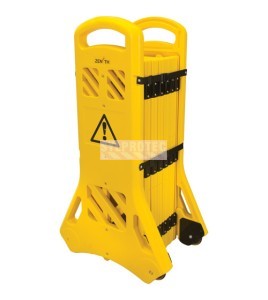
The drum (EPTBA) is the marker compatible with this base, the barrier (EPT999) creates a movable perimeter, the barricade (EPT195) offers an 11 1/2 ft option, and the casters (EPT999R) help move the EPT999 barrier.
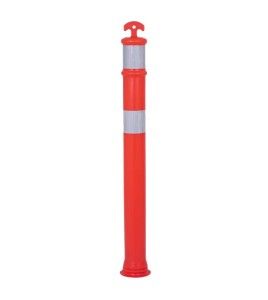
To complete ground signaling, the cone (EPTCONE) marks a point to avoid, the orange orange cone (EPTCONE28) gives a 28 in format, the lamp (LL177) adds a lighted marker, and the strobe (LL2304) increases visibility at a signaling point.
Data sheet
You might also like