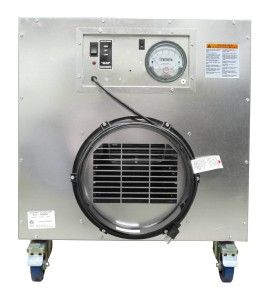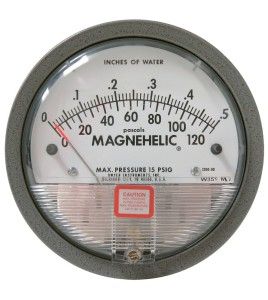
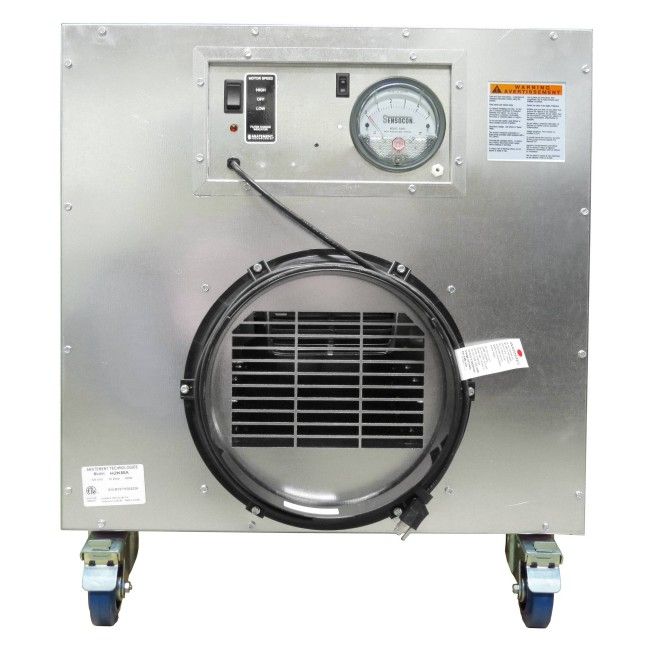
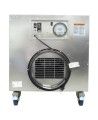
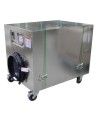
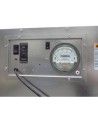
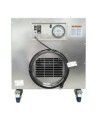
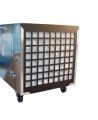
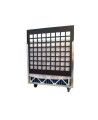
The HEPA-Aire portable air purifier is the essential tool for professionals working in asbestos abatement, mold remediation, and dust control. With a powerful airflow capacity of 1300 to 2000 cfm and a certified HEPA filtration system, this unit ensures clean air in contaminated environments. Designed to meet UL and CSA standards, it offers safe and reliable operation in negative pressure, positive pressure, or air recirculation modes. This purifier is equipped with a differential pressure gauge that indicates the saturation level of your HEPA filter.
No returnable if used. For more information about our return policy, please refer to the Orders and Returns.
Abatement Technologies manufacturer’s code: H2KMA
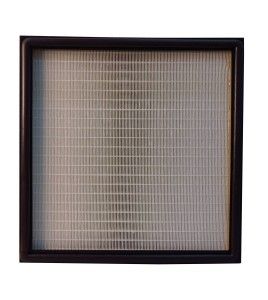
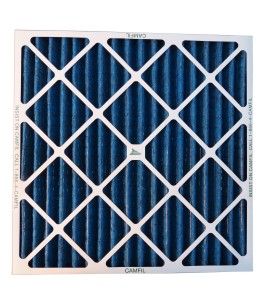
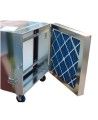
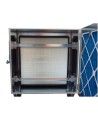
This HEPA air purifier features a three-stage filtration system: a primary filter for large particles, a pleated secondary filter for medium-sized contaminants, and a certified HEPA filter that captures 99.97% of particles as small as 0.3 microns. An optional activated carbon filter is available for volatile organic compounds during mold remediation. This advanced filtration setup ensures compliance with air quality standards for asbestos removal, mold cleanup, and fine dust control. This purifier is equipped with a differential pressure gauge that indicates the saturation level of your HEPA filter.
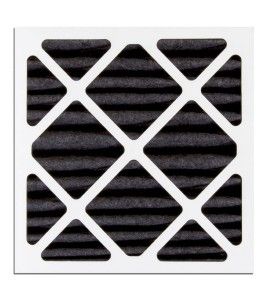
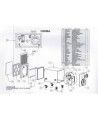
It is equipped with three different filters, which overlap one another accordingly to a given order. The air scrubber comes with one set of filters, that is, a primary filter, an accordion-shaped secondary filter and a HEPA filter. It is now possible to replace the secondary filter by another secondary filter of activated coal for protection from organic vapors in low concentrations. This type of filter is particularly useful when it comes to mold decontamination work.
This air scrubber is certified ETL and meets UL and CSA requirements as for safety standards. This equipment minimal power supply requirement is 120V/60 Hz. Its normal operating amps is 9 A.
For more information, please consult the manufacturer’s manual available at the bottom of the page.
High-efficiency filtration and professional performance.
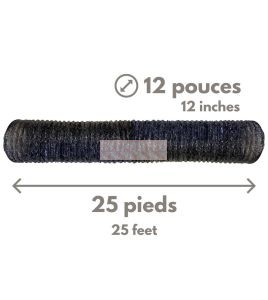
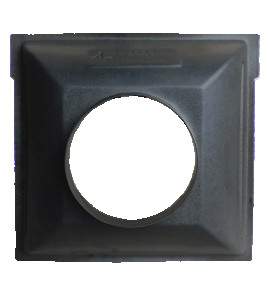
Weighing 124 lb (56.25 kg), the Hepa-Aire unit is built for mobility and durability. It includes four 4-inch casters—two fixed and two swivels—and four heavy-duty handles securely anchored to the base. The unit measures 35.75 in wide, 26 in deep, and 30.25 in high (90.81 cm × 66.04 cm × 76.84 cm), making it compact and easy to maneuver on job sites. The galvanized steel housing features a 12-inch circular air outlet for duct connection and a front-access panel for quick filter replacement. In addition, this purifier is equipped with a differential pressure gauge that indicates the saturation level of your HEPA filter.
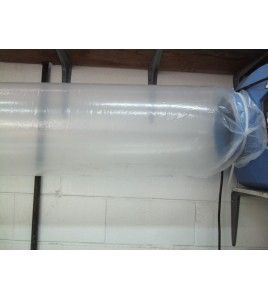
Installing the Hepa-Aire air purifier is straightforward and tool-free. Simply position the unit in the work area, connect the exhaust duct to the air outlet, and plug it into a standard 120v/60hz power source. Choose between low (1300 cfm) or high (2000 cfm) speed depending on the contamination level and room volume. The unit’s casters and handles make relocation effortless.
To maintain optimal performance, regular maintenance is essential. Replace the primary filter frequently and monitor the visual indicator for the secondary and HEPA filters. For asbestos or mold remediation, DOP testing is mandatory. This test must be performed before starting work, every time the unit is moved, and every four weeks if the unit remains stationary. The DOP (dispersed oil particulate) test ensures the HEPA filter’s integrity by detecting leaks through the pleated media, frame, or seals. Certified HEPA filters will bear a label confirming compliance.
To determine how many air purifiers are needed, calculate the room volume (length × width × height), identify the required air changes per hour (typically 4 in Québec, 6 elsewhere), and know your unit’s cfm rating. Use this formula: Number of purifiers = room volume ÷ (15 min × purifier cfm)
Example for a 20,000 ft³ space: At 1300 cfm, 2 purifiers are needed. At 2000 cfm, 1 purifier is sufficient
These calculations assume ideal conditions with perfect sealing. In practice, you should plan for higher airflow to offset pressure losses due to door openings, filter saturation, duct length, and power fluctuations. For added safety, consider using a more powerful unit or combining two purifiers to maintain consistent negative pressure.
Yes, DOP testing is mandatory for asbestos and mold remediation to verify the HEPA filter’s effectiveness and ensure job site safety.
Use the room volume, required air changes, and a purifier cfm to estimate the number of units. Always round up and consider practical airflow losses.
Absolutely. The Hepa-Aire unit is ideal for capturing concrete, wood, plaster, and other fine dust particles, making it suitable for general construction and renovation projects.
Need additional safety equipment? See the articles; Safety hard hat (TA14LR), Omega II minor hard hat type 1 (TA14FS), motorized respirator with 1000 protection factors (R6800PF), 3M mask protection film (R6885).
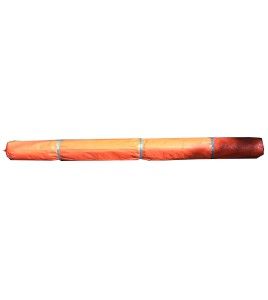
Under "Accessories" at the bottom of the page. If you're looking for work equipment, have a look at the following products: White antistatic coveralls with (V51), containment fabric (SACTT2) or (SAH2M) air cleaners.
Data sheet
You might also like
The HEPA-Aire portable air purifier is the essential tool for professionals working in asbestos abatement, mold remediation, and dust control. With a powerful airflow capacity of 1300 to 2000 cfm and a certified HEPA filtration system, this unit ensures clean air in contaminated environments. Designed to meet UL and CSA standards, it offers safe and reliable operation in negative pressure, positive pressure, or air recirculation modes. This purifier is equipped with a differential pressure gauge that indicates the saturation level of your HEPA filter.