No returnable if used. For more information about our return policy, please refer to the Orders and Returns.
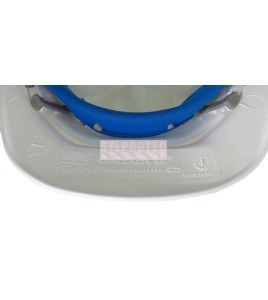
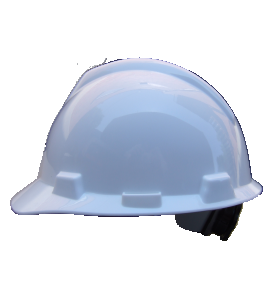
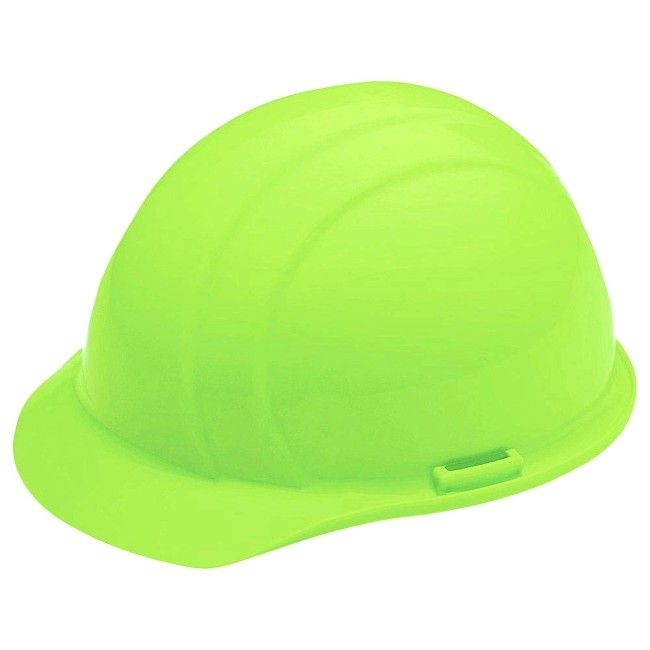
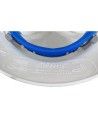
Delta Plus Canada Inc. Independence safety helmet in a high-visibility version, particularly suited to flagmen and workers near traffic. It is equipped with a four-point (4) suspension adjustable in several ways, notably at the neck band which swivels and features a ratchet to set the tension around the head. This helmet meets the CSA Z94.1-15 standard and is certified type 1, class E. Sold individually, 12 units per case. Delta Plus manufacturer's code: WEL16977HL (high visibility).
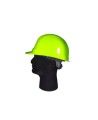
This safety helmet features a high-density polyethylene (HDPE) shell. Certified type 1 and class E in compliance with CSA Z94.1-15, it is legal to work with in Canada, offering physical protection of the top of the head and electrical protection from a 20,000 volts nominal current. Its high-visibility color increases worker visibility — a major asset for flagmen and roadwork sites. This model can be worn the regular way (peak up front) or in reverse donning: the reverse mode allows one to see overhead if needed and to wear a face shield, for example when welding. It also meets ANSI/ISEA Z89.1-2014. The ratchet system adjusts from 6½ in to 8 in in diameter, ensuring a safe and comfortable fit. Weight: 13.26 oz (376 g).
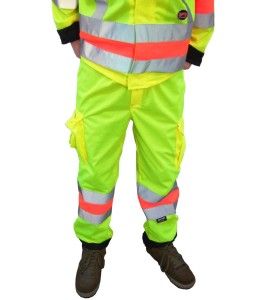
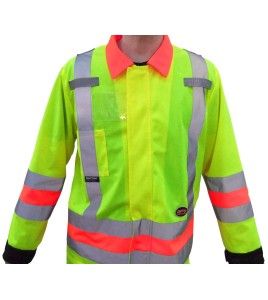
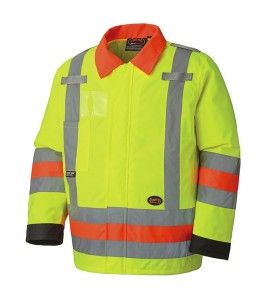
The high-visibility version of the Independence helmet is designed for environments where worker visibility is critical: traffic control, work near traffic, night work or low-light conditions. Its bright shade draws the attention of drivers and machinery operators, reducing accident risk. Combined with high-visibility safety clothing, it completes the flagman's regulatory equipment.
The shell is made of high-density polyethylene (HDPE), widely used industrially for its physical strength. HDPE resists a wide spectrum of chemicals (most acids, bases, salts, alcohols, lubricants and oils, as well as gasoline and kerosene). It is not resistant to some fuels (diesel, hydrazine, jet fuel, crude oil, propane), some solvents (acetone, benzene, toluene, mineral spirits, paint thinner, varsol), phenols, ethers, ozone, some concentrated acids (nitric, hydrochloric, phosphoric) and some concentrated strong bases (sodium hydroxide, lithium hydroxide). If the helmet must withstand direct chemical contact, perform a contact test first. Polyethylene withstands up to 105 °C and becomes brittle as low as -50 °C; it resists oxidizers poorly. The suspension structure and anchor points are made of polypropylene, while the webbing is nylon.
This helmet is certified type 1 (protection against impacts on the top of the head) and class E (electrical protection). Class E helmets successfully pass a dielectric rigidity test — the lower the leakage current, the better the dielectric rigidity. They are designed to withstand a maximum voltage of 20,000 volts at 60 Hertz. This is the model most widely used by construction workers.

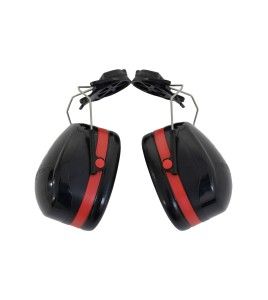
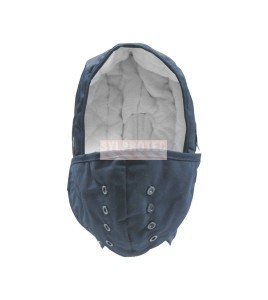
The suspension already includes a washable, durable brow pad. Side slots allow mounting various accessories: earmuffs (OPH10P3), a headgear face shield holder (YPH24) with its polycarbonate visor (YVP96), or a cold-weather liner. This helmet has its own dedicated chin strap (TA14CS). Manufacturer-approved retroreflective stripes are also available; decals or stickers are not recommended as they hinder inspection.
The CSA Z94.1-15 standard recommends checking and cleaning the helmet and its suspension daily, with lukewarm water and a mild soap. The worker must inspect the helmet each day for any cracking, splitting or discoloration; this is why it should not be covered with stickers or cleaned with aggressive solutions. Any helmet that has withstood a severe impact must be replaced. According to the manufacturer, the shell's maximum service life should not exceed 5 years. The suspension should be inspected and washed daily and the manufacturer recommends replacing it annually. Never use the inside of the helmet to carry tools.
It is the same Delta Plus Independence type 1 class E helmet, but in a high-visibility version intended for flagmen and work near traffic. The protection specifications (type 1, class E, 20,000 V) are identical; visibility is what is optimized. For the regular version, see the Independence helmet (TA14LR).
Type 1 protects against impacts on the top of the head; class E offers electrical protection up to 20,000 volts (60 Hz). This helmet complies with CSA Z94.1-15 and ANSI/ISEA Z89.1-2014.
The manufacturer recommends a maximum service life of 5 years for the shell and annual replacement of the suspension. Any helmet that has withstood a severe impact must be replaced immediately.
To complete your protection, first see the standard type 1 class E Independence helmet (TA14LR) and the type 2 lateral-protection Omega II helmet (TA14OR), as well as the dedicated chin strap (TA14CS) that keeps the helmet in place at height. Add the Peltor 3M hearing protector (OPX4P51E).
Under "Accessories" at the bottom of the page, complete your equipment with the 3M headgear face shield holder (YPH24), its polycarbonate visor (YVP96) and the protective coveralls (V51).
Data sheet
You might also like