
No returnable if used. For more information about our return policy, please refer to the Orders and Returns.
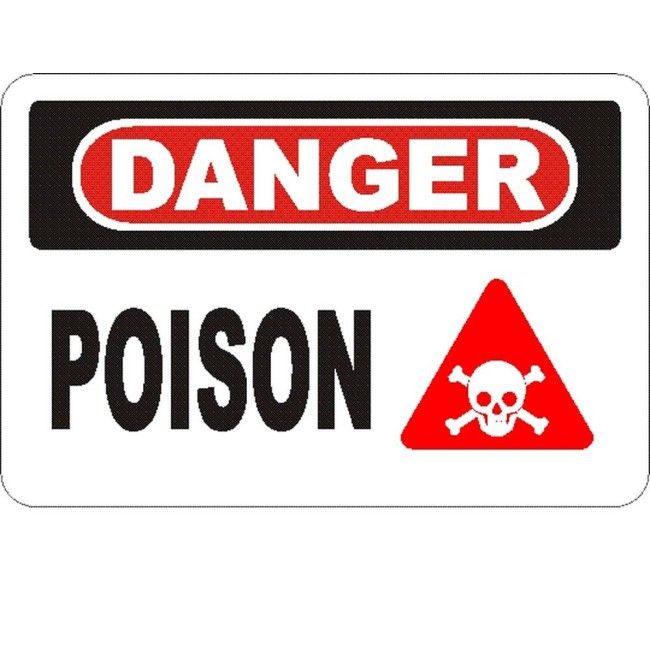
The EOD118 bilingual "Danger Poison" sign identifies an area where poisons, toxic products or hazardous substances may present a risk to people. It is suited to chemical rooms, laboratories, storage cabinets, workshops, maintenance areas, cleaning rooms, warehouses and sectors where the possible presence of a toxic substance must be visible before access. Its direct message helps draw attention before handling, entering the area or coming into contact with an identified container. This sign supports chemical danger signage without replacing safety data sheets, internal procedures, training, protective equipment or site-specific obligations.
Several materials, sizes and formats are available from the drop-down menu.
UV-protecting lamination, retro-reflective sheeting or photoluminescent finishing can also be requested depending on the need. Please contact customer service for sign formats other than those offered in the options above, as well as for English or bilingual signs. Please allow three (3) weeks to receive special orders. If you cannot find the sign you need, please contact our customer service team to obtain custom signage.
The original text of this product page carried an important idea: almost anything can become a poison depending on the dose, exposure and nature of the substance. Poisons may be chemical, biological or physical, and they may appear as solids, liquids or gases.
Poisons can act in several ways: neurotoxic substances such as some nerve agents, necrotizing or hemolytic substances such as some venoms, inhibitors such as cyanide, cumulative poisons such as heavy metals, or mutagenic substances such as asbestos. The historical product text essentially invited the reader to ask the most famous poisoning victim, the philosopher Socrates, who was put to death by hemlock, what poisons can do. That is why they must be clearly identified: a poison hazard is not only theoretical, because the effect depends on the substance, the dose and the exposure.
Select the material according to the surface, environment and expected duration of use. Self-adhesive vinyl is suited to clean, smooth and dry surfaces; plastic and aluminum are better when a rigid sign plate is required. Clean the sign gently with a non-abrasive cloth and replace it if the message, pictogram or colour becomes difficult to read.
Yes. It helps identify an area where poisons or toxic substances may present a danger.
Because the reference to Socrates, put to death by hemlock, makes the hazard concrete and memorable. It reinforces why poisons must be clearly identified before someone enters a risk area or handles a toxic substance.
Available variants include self-adhesive vinyl, plastic and aluminum depending on the selected size.
7 in x 5 in and 10 in x 7 in formats are offered depending on the available variants.
No. It reinforces the visual message, but it does not replace safety data sheets, internal procedures, training or protective equipment.
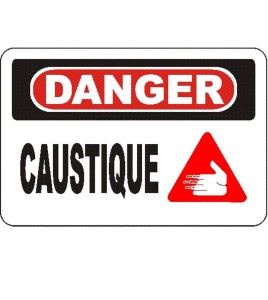
For other chemical hazards, the corrosive sign (EOD115) identifies corrosive materials. The acid sign (EOD116) identifies areas with acid products. The caustic sign (EOD117) identifies caustic products. The access sign (EOD100) identifies an area forbidden to unauthorized persons.
To clarify other restrictions around a dangerous area, the admission sign (EOD102) limits entry to persons with business on site. The personnel sign (EOD105) reminds users that access is for authorized personnel only. The permit sign (EOD112) limits confined space entry to authorized persons. The procedure sign (EOD113) reminds users to follow the work procedure.

Data sheet
You might also like