- New
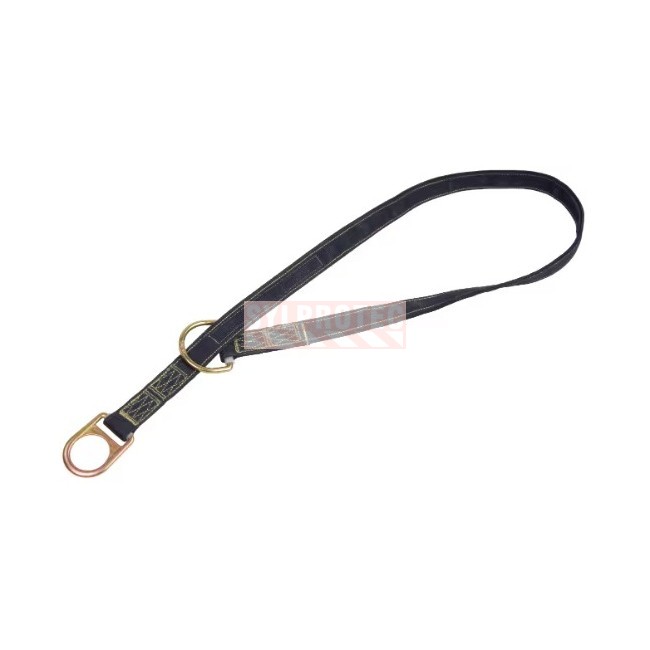
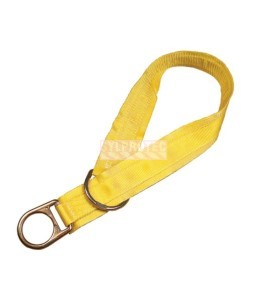
DBI-SALA 3M flame-resistant Kevlar web tie-off anchorage adapter, wrapped in a choke configuration around a structure to create a reusable, portable anchorage point. Kevlar web engineered for hot work (foundries, steel making, chemical industry, rescue and fire services). Web strength of 2,267 kg (5,000 lb), single-worker capacity of 140 kg (310 lb). Meets ANSI Z359.1 and OSHA. Available in 3, 4 and 6 ft. Steel hardware, O-ring and connector.
No returnable if used. For more information about our return policy, please refer to the Orders and Returns.
3M purchase code 7012151349, model no. 1002200 (3 ft variant).
Available in 3 lengths (3, 4 and 6 ft). Select the desired length from the drop-down menu.
The DBI-SALA 3M Web Tie-Off Adapter is a Kevlar-reinforced sling that wraps around a beam, column or structural member and chokes back on itself to form a secure anchor point. The Kevlar reinforcement resists flame and high temperatures, making this adapter suited to foundries, steelmaking, the chemical industry and fire and rescue services. Reusable and portable, it moves easily from one jobsite to another and fits structures of varying sizes.
| Reference | Model | No 3M | Length |
| FPA1002200 | 1002200 | 7012151349 | 3 ft |
| FPA1002201 | 1002201 | 7012815120 | 4 ft |
| FPA1002202 | 1002202 | 7100281822 | 6 ft |
Foundries, steel mills, chemical and petrochemical plants, welding and hot work, fire services and emergency rescue. Wherever heat or flame calls for a temporary anchor point on fire-resistant webbing, created quickly around an existing structure.
Select a structure able to support the required load. Wrap the sling around the structure, pass the ring at one end through the ring or connector at the other end, then tighten to create the choke. Connect the personal fall-arrest system to the anchor point thus formed. Avoid sharp edges and protect the webbing from direct contact with incandescent surfaces.
Before each use, check the Kevlar webbing (cuts, burns, fraying, discoloration), the stitching and the hardware (corrosion, deformation). Remove from service any adaptor that is damaged or has arrested a fall.
Clean with lukewarm water and a cloth, without abrasives or chemicals. Air dry away from direct heat. Store in a dry place, away from humidity and UV rays, and protect the hardware from corrosion.
The minimum strength required of an anchor point depends on the type of system and on the applicable provincial regulation. Because a fall arrest system is almost always used with a shock absorber, this is the value that applies in the vast majority of work situations.
A permanent or multi-point anchor must be certified by a professional engineer or installed according to the manufacturer's written instructions. When several fall arrest systems are connected to the same anchor, the required strength multiplies by the number of systems attached. Always have the selection and installation done by a competent person.
Here are the most frequent questions about this DBI-SALA 3M flame-resistant Kevlar web tie-off adapter anchor.
Kevlar resists flame and high temperatures, protecting the anchor in hot environments where polyester webbing would melt.
It is designed for one worker, up to 140 kg (310 lb), and meets ANSI Z359.1.
Temporary and reusable, installed and removed without tools.
Yes, as long as it passes inspection and has not arrested a fall.
To build a complete fall arrest system around this flame-resistant anchorage point, first plan how to connect to it: the web choke tie-off web anchor (FPA100200X) for a quick wrap around a structure, the adjustable polyester-web adapter anchor (FPA10021XX), and the ExoFit NEX SEAT-BELT 4 D-ring suspension harness (FPH1113653CALP) worn by the lineworker.
Then complete with the lanyards suited to the work position: an adjustable web positioning lanyard (FPL1231016C), an adjustable rope lanyard with a steel hook (FPL1234070) or a lighter aluminum hook (FPL1234071), as well as the Cynch-Lok pole-climbing devices offered in rope (FPL1204057) or strap (FPL1204075).

Data sheet
Specific References
You might also like
DBI-SALA 3M flame-resistant Kevlar web tie-off anchorage adapter, wrapped in a choke configuration around a structure to create a reusable, portable anchorage point. Kevlar web engineered for hot work (foundries, steel making, chemical industry, rescue and fire services). Web strength of 2,267 kg (5,000 lb), single-worker capacity of 140 kg (310 lb). Meets ANSI Z359.1 and OSHA. Available in 3, 4 and 6 ft. Steel hardware, O-ring and connector.