No returnable if used. For more information about our return policy, please refer to the Orders and Returns.
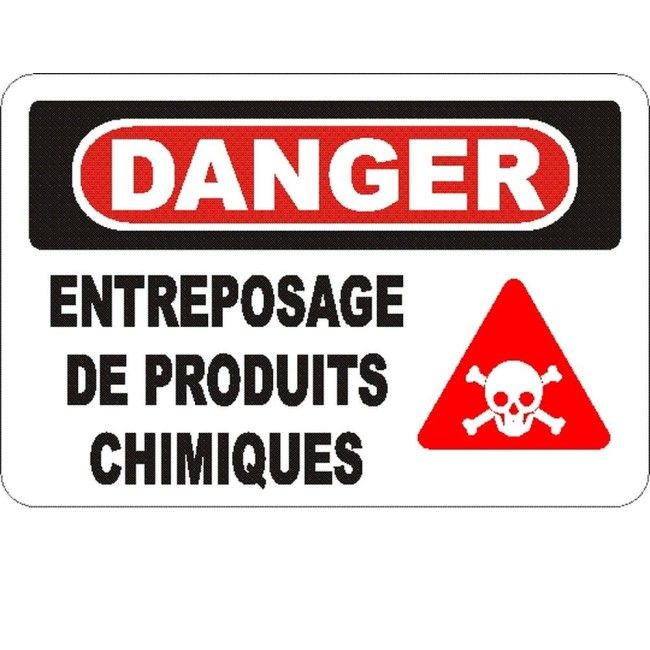
The EOD121 French "Danger Entreposage de produits chimiques" sign identifies an area where chemicals are stored, handled or kept near the work area. The printed French message means "Danger Chemical Storage Area" in English and is suited to laboratories, warehouses, chemical cabinets, workshops, maintenance rooms, cleaning areas, industrial facilities and sectors where hazardous substances must be clearly identified before access. Its direct message helps workers and visitors quickly recognize that they are entering a chemical storage area. This sign supports workplace prevention without replacing safety data sheets, internal procedures, container labelling, training, ventilation, protective equipment or site-specific obligations.
Several materials, sizes and formats are available from the drop-down menu.
UV-protecting lamination, retro-reflective sheeting or photoluminescent finishing can also be requested depending on the need. Please contact customer service for sign formats other than those offered in the options above, as well as for English or bilingual signs. Please allow four (4) weeks to receive special orders. If you cannot find the sign you need, please contact our customer service team to obtain custom signage.
The original text reminds users that chemical storage areas should be marked to inform people moving near hazardous substances. Whether the site stores concentrated acids and bases, flammable products, solvents such as alcohols, ketones or hydrocarbons, inorganic chemicals, chlorine products, pesticides or other hazardous materials, proper storage methods and visible signage help people plan the work and avoid unpleasant surprises.
The EOD121 sign can be installed at the entrance to a room, on a cabinet door, near a chemical receiving area or in a sector where hazardous materials are stored temporarily. It helps remind people that the contents of the area must be handled with care and that site procedures should be followed before moving, opening, transferring or using a container.
Choosing a sign depends on the right material, reading distance, work environment and required format. Self-adhesive vinyl is suited to clean, smooth and dry surfaces, especially indoors. Plastic can be used indoors or outdoors, but colours may fade faster if the sign is exposed to UV light. Aluminum is often recommended outdoors or in areas where impact is possible. UV-protecting lamination may slow fading, without preventing it permanently.
Yes. It identifies an area used for chemical storage and indicates that special attention is required before entering or working there.
The page keeps acids, concentrated bases, flammable products, solvents, alcohols, ketones, hydrocarbons, inorganic products, chlorine products and pesticides.
Clear signage helps people on site plan, manage and follow the instructions suited to the substances present.
Available variants include self-adhesive vinyl, plastic and aluminum, including 7 in x 5 in and 10 in x 7 in formats.
No. It reinforces the visual message, but it does not replace safety data sheets, labelling, separation of incompatible products, training or protective equipment.
To clarify the zone, the keepout sign (EOD122) adds keep out to chemical storage signage. The toxics sign (EOD119) identifies toxic materials. The fumes sign (EOD120) identifies areas with toxic gases or fumes. The poison sign (EOD118) identifies poison areas.
For other hazards related to chemicals, the corrosive sign (EOD115) identifies corrosive materials. The acid sign (EOD116) identifies areas with acid products. The caustic sign (EOD117) identifies caustic products. The access sign (EOD100) identifies an area forbidden to unauthorized persons.

Data sheet
You might also like