- New
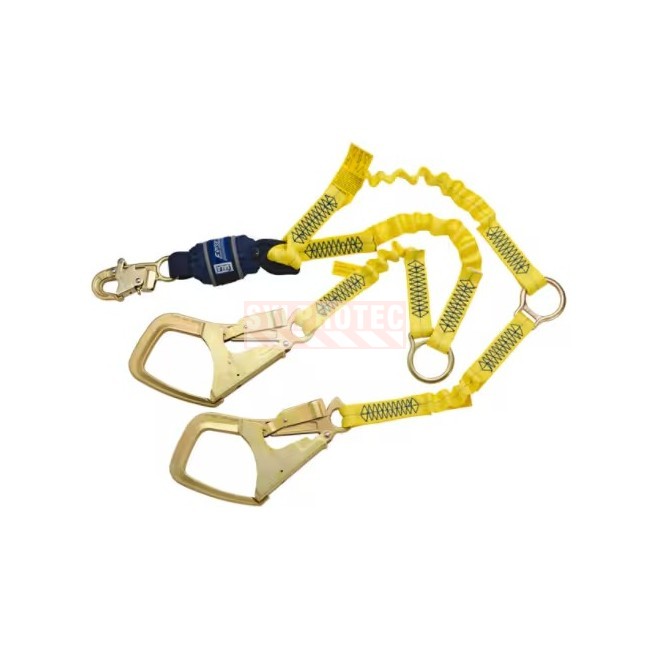
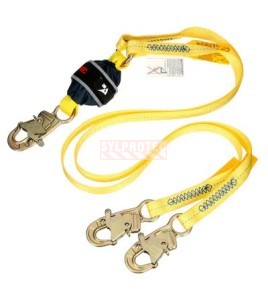
The EZ-Stop Force2 DBI-SALA double-leg Y-lanyard is built to deliver continuous protection and high mobility for work at height. Its Vectran stretchable web extends with the worker’s movements, while its twin-leg design provides permanent 100% tie-off when moving between anchor points.
No returnable if used. For more information about our return policy, please refer to the Orders and Returns.
3M purchase code: 7012817223, model: 1246152C
This double-leg Y-lanyard with stretchable web is ideal for work requiring frequent movement between anchor points, thanks to its 100% continuous connection.
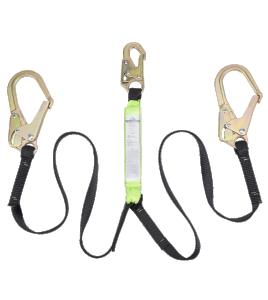
It is equipped with a central spring snap hook for connection to the harness, as well as two large-opening rebar hooks at the ends, allowing for secure anchoring to larger-diameter structures.
In the Canadian construction and industrial maintenance sectors, fall prevention is a top priority. This 6-foot double-leg Y-lanyard allows workers to move between different anchor points without ever being disconnected. The integrated energy absorber is designed to limit fall arrest forces to safe levels, significantly reducing the risk of serious injury.
What sets this model apart is its exclusive Vectran energy-absorbing system, a fibre known for its high resistance to cuts and chemicals, outperforming polyester. Its stretchable web extends with the worker's movements and then retracts, reducing the risk of snagging and tripping. The built-in impact indicator allows for quick visual inspection.
Important Note: This product allows the user to remain attached at all times during movement (attach the second arm before detaching the first). In the event of a fall, the absorber deploys to limit the impact forces on the body.
Location: it is inside the pouch that contains the energy absorber.
Operation: the absorber is designed with a special safety stitch.
Visual inspection: if the lanyard sustains an impact force, this stitch tears or the absorber begins to deploy. A warning label then becomes visible, clearly indicating that the equipment is no longer safe and must be discarded immediately.
For optimal safety, connect the absorber end to the dorsal attachment point (D-ring) of your safety harness. As you move, attach one of the Y-arms to an approved anchor point before detaching the second. Make sure the hooks are properly locked. Avoid attaching the unused arm to an unintended part of the harness so as not to interfere with the deployment of the absorber in the event of a fall.
Rigorous maintenance extends the life of your lanyard and guarantees your safety. Before each use, inspect the web for cuts, burns, or signs of excessive wear. Verify the proper functioning of the hooks. Clean the lanyard with lukewarm water and mild soap if it becomes soiled, and let it air dry away from direct heat sources. Store it in a cool, dry place, protected from UV rays and chemicals.
It is crucial to calculate your fall clearance before starting work. Since this lanyard is 6 feet long and the absorber can deploy several additional feet, ensure there is sufficient free distance below your work area to avoid ground impact. Always train your personnel in the proper use of fall protection equipment and ensure a rescue plan is in place.
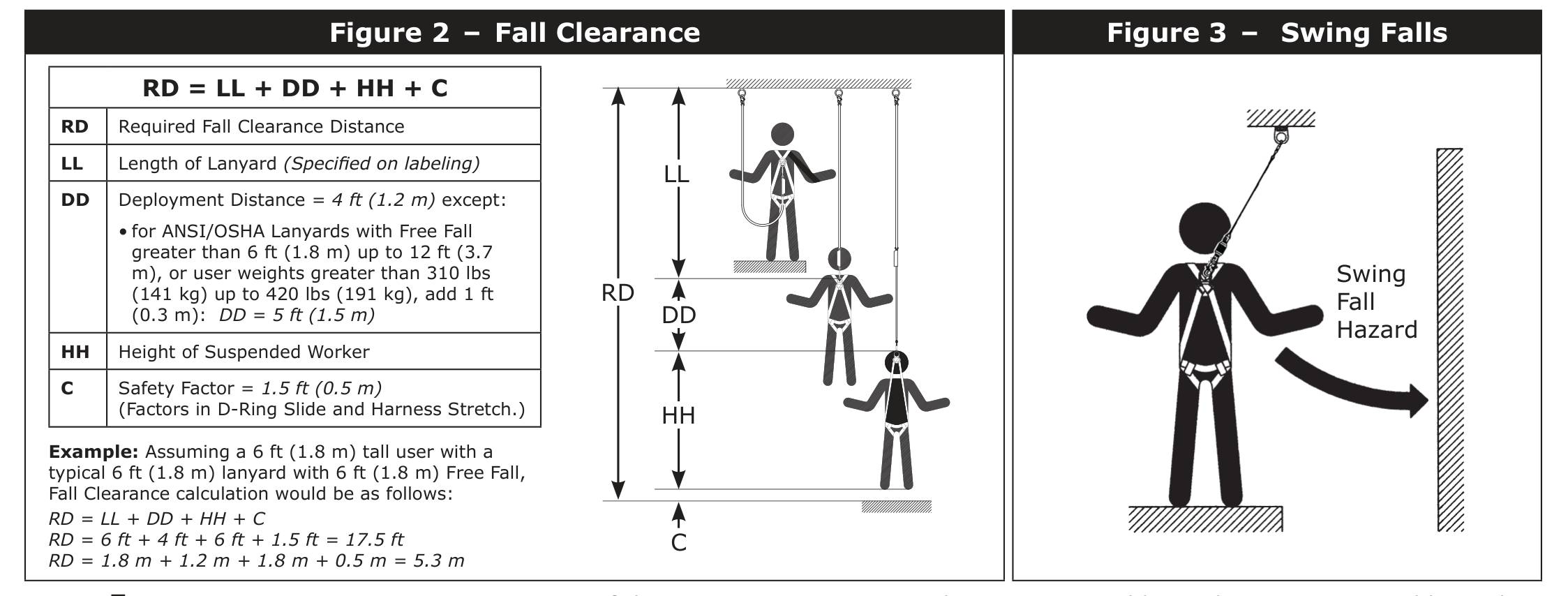
Before using a DBI-SALA energy-absorbing lanyard from 3M, it is essential to calculate the fall clearance, that is the free space required below the anchor point to arrest a fall before the worker strikes the ground or an obstacle. This fall clearance adds up from several elements: the lanyard length, the absorber deployment, the worker height, the dorsal D-ring slip and a safety margin.
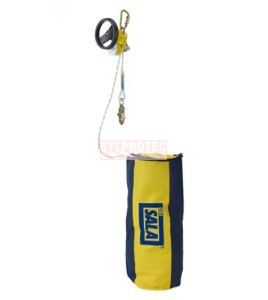
For this 6 ft lanyard, the calculation gives about 17.5 ft (5.3 m) of clearance under an overhead anchor: the lanyard (6 ft), the absorber deployment (4 ft), the worker height (6 ft) and a safety margin (1.5 ft). For low-height applications, choose a self-retracting lifeline instead. An incorrect calculation is one of the most common causes of serious injury at height, even when the equipment is compliant.
The Vectran fibre offers superior resistance to cuts and chemicals compared to polyester. The web stretches with movement and retracts, reducing bulk and the risk of snagging.
While possible, the purpose of the double-arm design is to facilitate movement. It is recommended to use them alternately.
Lifespan depends on use and maintenance, but it must be removed from service immediately if it has sustained a fall or if inspection reveals degradation of the web or metallic components.
Adding the lanyard (6 ft), the absorber deployment (4 ft), the worker height (6 ft) and a safety margin (1.5 ft), you need about 17.5 ft (5.3 m) of clearance under an overhead anchor. For low-height applications, choose a self-retracting lifeline instead.
This is the most dangerous scenario (fall factor 2): the free fall can reach twice the lanyard length. This EZ-Stop Force2 lanyard is specifically designed for this situation thanks to its Force2 absorber, certified for a foot-level anchor, unlike a standard lanyard.
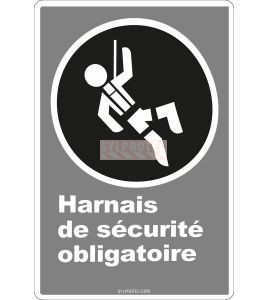
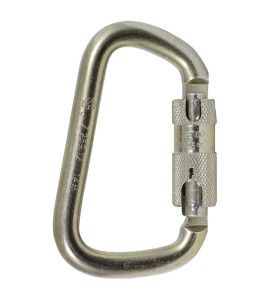
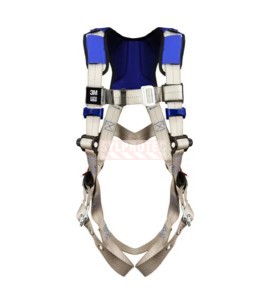
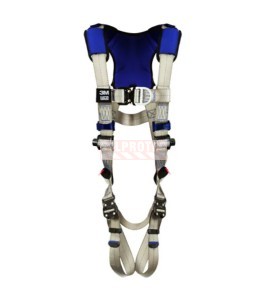
To optimize your fall protection system, combine this lanyard with a suitable safety harness, for example the ExoFit X100 Class A vest-style harness (FPH140100XCA) or the ExoFit X100 Class AL vest-style harness (FPH140102XCAL). Add reliable anchors: a permanent connector (FPA826) for roofing, a temporary anchor (FPAF075N) for concrete, or a robust fixed anchor (FPA822). Complete your setup with the mandatory harness sign (ECO130) and the self-locking D-shaped carabiner (FPAM88). Each component of the harness-lanyard-anchor system can save lives at height.

Data sheet
You might also like
The EZ-Stop Force2 DBI-SALA double-leg Y-lanyard is built to deliver continuous protection and high mobility for work at height. Its Vectran stretchable web extends with the worker’s movements, while its twin-leg design provides permanent 100% tie-off when moving between anchor points.