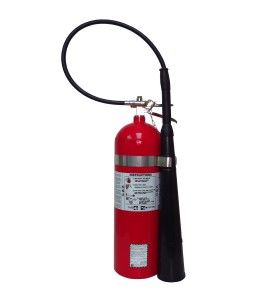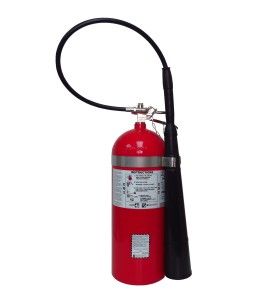
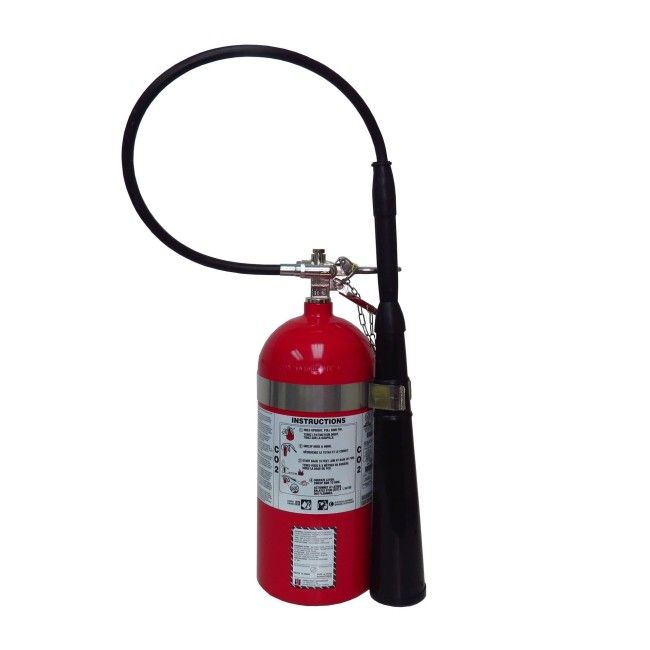


10 lb CO2 portable fire extinguisher, class BC, ULC 10BC rated, carbon dioxide agent, aluminum cylinder. Ideal for electrical fires. With wall hook.
No returnable if used. For more information about our return policy, please refer to the Orders and Returns.
The 10 lb CO2 portable fire extinguisher is rated ULC 10BC and designed for class B and C fires. Carbon dioxide, clean and residue-free, makes it an ideal choice for electrical fires, workshops, labs and server rooms. It comes with a wall hook.
The agent is carbon dioxide (CO2), a clean, cooling gas that smothers fire without leaving residue. Carbon dioxide does not damage your equipment and the discharge horn does not conduct electricity, making it the best choice for electrical and electronic equipment fires. The lightweight, durable aluminum cylinder is tested to CTC specifications. This Strike-First extinguisher is easy and safe to use, with illustrated instructions.
Agent type: carbon dioxide (CO2).
Capacity: 10 lb.
ULC rating: 10BC.
Approval: ULC.
Discharge range: 6 to 12 ft (1.8 to 3.6 m).
Discharge time: 10 secondes.
Operating temperature: -30°C to 49°C (-22°F to 120°F).
Weight: 27 lb (12,25 kg).
Material: aluminum.
Manufacturer: Strike-First.
This CO2 extinguisher is recommended for class B fires (flammable liquids and gases) and class C fires (energized electrical equipment). Carbon dioxide is a clean agent that leaves no residue, making it ideal for sensitive electrical and electronic equipment.
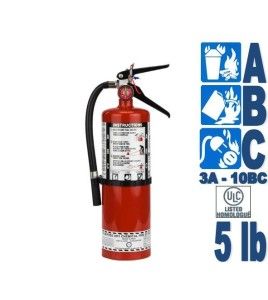
Class A: limited effectiveness on deep-seated solid-material fires (wood, paper); use a dry chemical or water extinguisher for class A.
Class D: do not use on combustible metals (class D).
Electrical fires: immediately cut the circuit power before extinguishing the fire.
Asphyxiation risk: CO2 displaces oxygen; in confined spaces, evacuate and ventilate after use.
Frostbite risk: the discharge horn gets very cold; hold the extinguisher by its handle, never by the horn.
An extinguisher only protects you if it is kept in good condition. The CO2 extinguisher has no pressure gauge: its charge is verified by weighing.
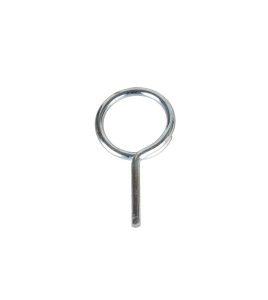
Monthly visual inspection: check the pin, seal, horn and hose, and that the aluminum cylinder is free of damage or corrosion.
Weight check: since there is no gauge, have the extinguisher weighed; weight loss indicates a leak and requires refilling.
Annual servicing: have the extinguisher inspected yearly by a certified technician (NFPA 10 / local regulations).
Recharge: any extinguisher that has been used, even partially, must be recharged immediately by a qualified shop.
Hydrostatic test: the high-pressure cylinder must undergo periodic testing per the standard.
The number before the "B" indicates the area of flammable-liquid fire the unit can control, and the "C" confirms safe use on energized electrical equipment. CO2 does not receive an A rating.
Carbon dioxide is non-conductive and leaves no residue, avoiding damage to sensitive electrical and electronic equipment.
Unlike dry chemical extinguishers, CO2 has no pressure gauge. Its charge is checked by weighing it; any weight loss indicates a leak.
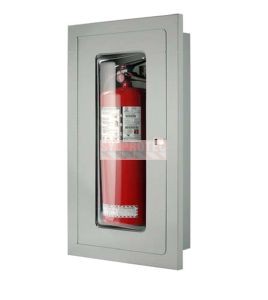
For complete fire protection, equip each at-risk area with an extinguisher matched to its fire class, mount it correctly and clearly mark it. Sylprotec offers the full range of portable extinguishers, brackets and cabinets to build a coherent setup.
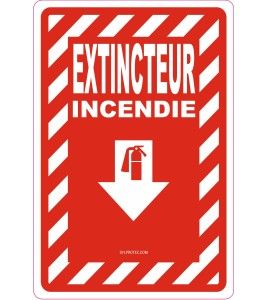
Sylprotec also offers an inspection and maintenance service for portable extinguishers in the greater Montreal area, plus a full range of fire-protection signs to reduce reaction time.
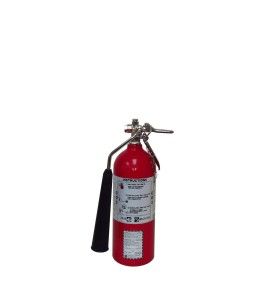
See also another CO2 size (EXCO5), a CO2 model (EXCO15), a CO2 version (EXCO20), a matching wall hook (CFL10), an ABC dry powder for class A (EXABC5), a semi-recessed cabinet (EC7), a hammer with chain for the cabinet (ECM) and an extinguisher-location sign (EI700). Under "Accessories" at the bottom of the page.
Data sheet
You might also like
10 lb CO2 portable fire extinguisher, class BC, ULC 10BC rated, carbon dioxide agent, aluminum cylinder. Ideal for electrical fires. With wall hook.