- On sale!


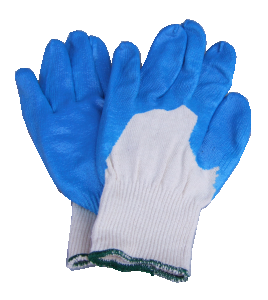
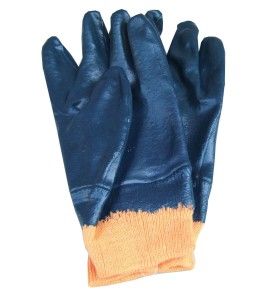
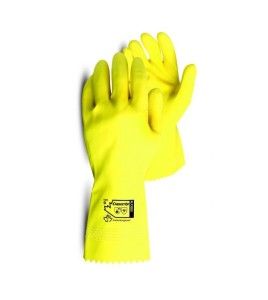
Natural yellow latex glove with blue neoprene coating, flock-lined and embossed, 12 in (30 cm) and 30 mils, sold by the pack (12 pairs). Added chemical resistance and a firm grip on wet or dry objects; CFIA/AAC approved.
No returnable if used. For more information about our return policy, please refer to the Orders and Returns.
The GL1224 combines a natural yellow latex base with a blue neoprene coating to deliver better resistance to chemicals, acids and greasy substances than latex alone, while keeping the elasticity and tactile sensitivity of natural rubber. Its 30 mils thickness and 12 in (30 cm) length protect the hand and wrist during corrosive handling, while the embossed diamond-pattern palm ensures a firm grip on wet or dry objects. The cotton flock lining eases donning and doffing and improves comfort during prolonged use. Sold by the pack (12 pairs/pack) and CFIA/AAC approved, it suits chemical and agri-food environments. Superior manufacturer's code: NL3030.
These gloves are available in sizes ranging from small (7) to extra-large (10). Please select the size needed in the field located above. This glove is also approved for food handling by the Canadian Food Inspection Agency (CFIA) and Agriculture and Agri-Food Canada (AAC).
This model of glove has been flock-lined, that is, it has undergone a process of depositing many small fiber particles - here cotton - onto its inner part. The thin layer of cotton - about 2 mils - eases the donning and doffing of the gloves. In order for the glove to retain a certain grip quality without adhering to objects while handling them, most of the palmar surface of the glove has an embossed pattern to offer a good grip on wet or dry objects.
Natural rubber latex properties vary according to the additives dispersed slightly through the compounding, but the over-arching characteristics of natural latex are fixed because the polymer structure is always the same. This fixed polymer structure delivers among other things its significant elasticity, its flexibility, its high tensile strength and its excellent barrier performance to viruses and blood borne pathogens. In comparison with its synthetic counterparts, latex offers a poor resistance to oil, fat and hydrocarbons, but resist well to a 10% concentration of nitric acid, a 36% concentration of hydrochloric acid and a 50% concentration of sulphuric acid. As long as the limitations on use set by the manufacturer are respected, your latex glove will remain comfortable and offer a good dexterity.
Neoprene is a synthetic rubber which offers a better resistance to hydrocarbons and temperature fluctuations than natural rubber. It has a low thermal-conductivity, thus letting your hands breathe while being able to retain some warmth. Neoprene is not always water-proof, but it does not really absorb liquids. It is also a little less flexible than nylon and really resistant to abrasion. Please note that neoprene is a known, although rare, allergen.
We recommend wearing cotton liners under these gloves to help absorb the moisture generated by perspiration (mens G217 and womens G218).
This glove is recommended for work requiring the use of chemical products, acids, caustics, greasy substances. It may also be used in chemical plants, agri-food and food processing industries, maintenance, car industry, etc.
Natural rubber latex contains latex proteins, a known allergen. It is thus customary to avoid latex if there is a slightest chance to come into contact with people who may or may not be allergic to latex. A simple contact with that protein can lead to a reaction or the development of a Type-I allergy, that is, a quick reaction sometime deadly. Symptoms may range from a simple skin irritation to a life-threatening anaphylactic reaction.
This glove may be reused, but we strongly recommend doing a periodic maintenance to avoid any contamination. To wash your gloves, wear them as if you were working and wash your hands with soap as you do normally. If need be, use bleach to remove stains or more tenacious agents. Please note that to ensure the quality of your product after wash, you must turn your gloves inside out to dry them completely.
Yes. The neoprene coating improves resistance to hydrocarbons, acids and greasy substances compared with latex alone; latex resists well to nitric acid (≤10%), hydrochloric acid (≤36%) and sulphuric acid (50%) within the manufacturer's limits.
Yes. It is approved by the CFIA and by Agriculture and Agri-Food Canada (AAC) for food handling.
Wear a cotton liner under the glove (G217 for men, G218 for women) to absorb the moisture generated by perspiration.
To complete your chemical hand protection, also consider the Ansell Industrial natural rubber latex glove, 17 mils thick and 13 in long, sold by the pair (GL4540), the natural yellow latex glove, textured and flock-lined, 12 in and 20 mils for light handling (GL9298), and the flame-retardant fibre glove with neoprene-coated palm for thermal and cut protection (GS13FRNE).
Then round out your kit with the Dexterity PVC-coated nylon knit glove for dry or oily gripping (GS13BPVC), the knit 13-gauge nylon knit glove with PU coating for fine handling (GS13GPU), its economic PU-coated version for high-volume use (GS13BKPUQ), plus the bleached polycotton inspection liners to absorb moisture, mens model (G217) and womens model (G218). Under "Accessories" at the bottom of the page.
Data sheet
Specific References
You might also like
Natural yellow latex glove with blue neoprene coating, flock-lined and embossed, 12 in (30 cm) and 30 mils, sold by the pack (12 pairs). Added chemical resistance and a firm grip on wet or dry objects; CFIA/AAC approved.