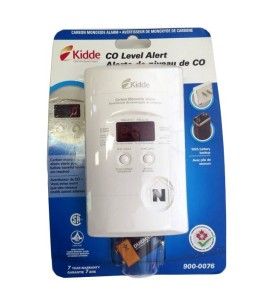
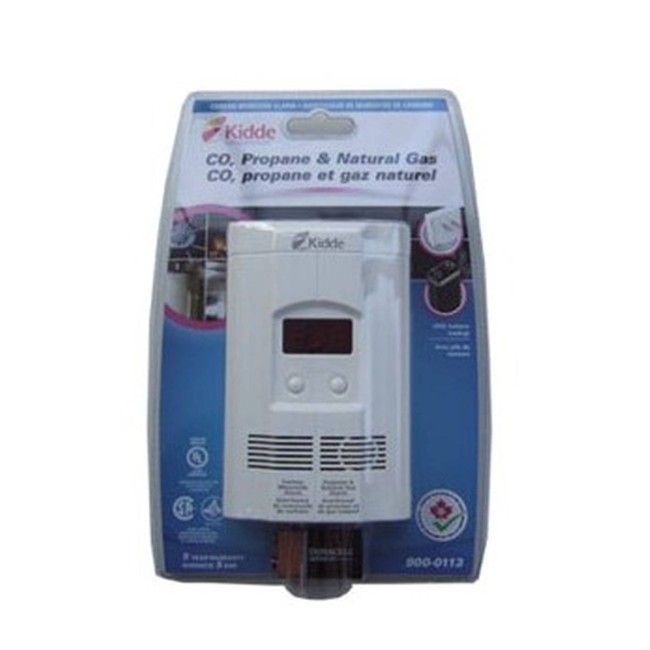

Carbon monoxide (CO) and explosive gas detector. Multi-gas digital readout displays CO levels and detects propane gas and natural gas. Meets UL and CSA.
No returnable if used. For more information about our return policy, please refer to the Orders and Returns.
This "3-in-1" detector is one of the most versatile safety devices for modern homes and businesses. It simultaneously monitors for Carbon Monoxide (a colorless, odorless toxic gas) as well as explosive gases like Natural Gas (Methane) and Propane. Its digital display provides real-time readings, offering total peace of mind for properties equipped with gas-powered heating, water heaters, or cooking appliances.
The ultimate choice for providing protection from carbon monoxide and gas leaks.
Easy to install, just plug in a wall outlet (120 V AC, 60 mA max, 60 Hz). With back-up battery (9 V DC) to provide continuous protection in case of a power failure. Replacement batteries: Duracell MN1604 or MX1604, or Energizer 522.
With digital memory that saves the highest level of CO detected. With test/reset button.
Warning:
This product is intended for use in indoor residential locations. It is not designed to measure compliance with commercial or industrial standards. It may not fully safeguard individuals with specific medical conditions. Individuals who have special notification needs or with medical problems should consider using warning devices which provide audible, visual or tactile signals for notifications of hazardous conditions, including carbon monoxide concentration under 30 ppm. If in doubt, consult a medical practitioner.
Kidde recommends that every home should at least one CSA listed carbon monoxide alarm located near sleeping areas.
Operates between 10% and 95% relative humidity (RH). Operates at temperatures between 4.4°C (40°F) and 37,8°C (100°F).
Replace these devices after 84 month (7 year).
This Kidde carbon monoxide alarm meets required response times as follows:
70 ppm, within 60 to 240 minutes.
150 ppm, within 10 to 50 minutes.
400 ppm, within 4 to 15 minutes.
Technical data sheet and installation manual available as PDF documents (English and French), attached below.
This model is ideal for homes with basements, seasonal cottages, or commercial kitchens:
Triple Protection: Detects Carbon Monoxide (CO) AND combustible gas leaks (Natural Gas/Methane and Propane) in a single unit.
Digital Display: Clearly indicates the concentration of CO in PPM (parts per million). For explosive gases, the display usually indicates if the unit is in "Gas" alarm mode.
Direct Plug-In (120V): Plugs into any standard wall outlet. Many models include a power cord to allow for optimal height placement on a wall.
9V Battery Backup: Continues to monitor the air and protect you during power outages—a critical time when risks from alternative heating sources or malfunctioning appliances increase.
Distinct Alarm Signals: Emits different audible and visual patterns depending on which gas is detected, allowing you to immediately identify the nature of the danger.
Gases Detected: Carbon Monoxide, Methane (Natural Gas), and Propane.
Power Source: 120V AC with 9V Alkaline battery backup (included).
Sensors: Electrochemical (for CO) and Metal Oxide/Catalytic (for explosive gases).
Alarm Volume: 85 dB at 10 feet.
Certifications: UL/ULC or CSA listed (compliant with Canadian and US safety standards).
Positioning is critical because different gases have different densities:
Natural Gas (Methane): Lighter than air; it rises toward the ceiling.
Propane: Heavier than air; it sinks and collects near the floor.
Carbon Monoxide (CO): Mixes evenly with air at all levels.
Expert Tip: If using a model with a power cord, install the unit at a medium height (about 5 feet from the floor) to effectively detect CO while remaining capable of catching gas leaks based on your room's airflow.
Usually, the digital readout is reserved for CO levels (PPM). For combustible gases, the unit is calibrated to trigger a loud alarm as soon as a dangerous concentration (typically 10% of the Lower Explosive Limit) is reached.
Most combination detectors have a service life of 5 to 7 years. An end-of-life "chirp" or error code will notify you when it is time to replace the entire unit.
Maintenance: Test the alarm monthly and gently vacuum the sensor vents to ensure optimal airflow and prevent dust buildup.
Gas Alarm Protocol: If the GAS alarm sounds (Propane or Natural Gas), do not operate any electrical switches (even a light switch could create a spark). Open windows only if they are right next to you, evacuate the premises immediately, and call emergency services from outside.
Data sheet
You might also like
Carbon monoxide (CO) and explosive gas detector. Multi-gas digital readout displays CO levels and detects propane gas and natural gas. Meets UL and CSA.