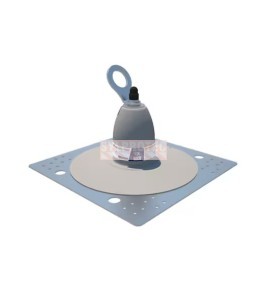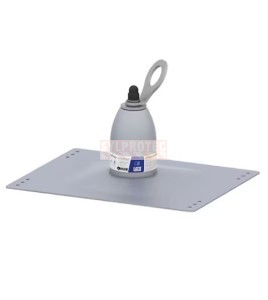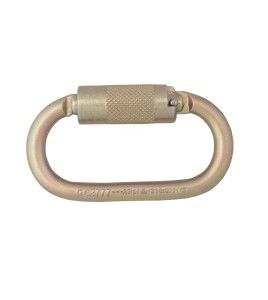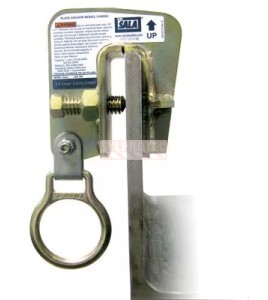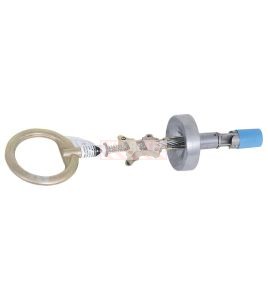
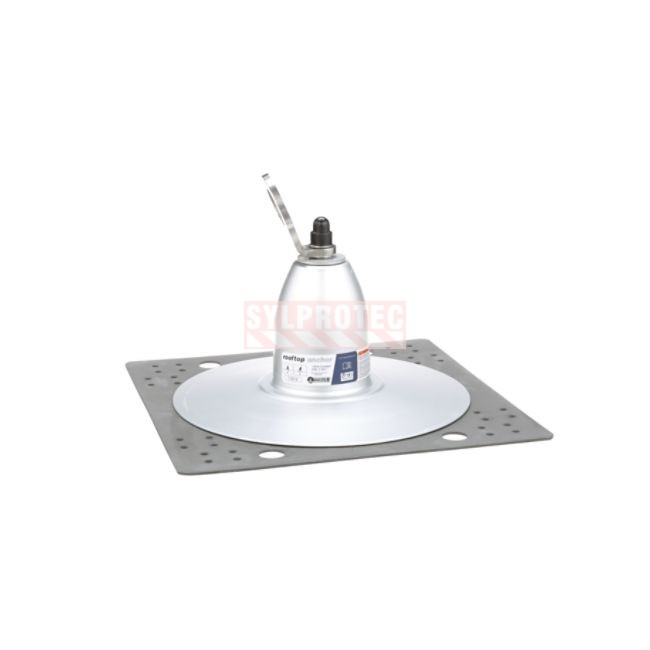
DBI-SALA 3M Roof Anchor for Bitumen Membrane Roofs. Permanent zinc-plated steel anchor point for bitumen-based membrane roofs. Capacity 310 lb (141 kg).
No returnable if used. For more information about our return policy, please refer to the Orders and Returns.
3M purchase code 7100314285, model no. 2100142.
The DBI-SALA 3M Roof Anchor for Bitumen Membrane Roofs is a permanent anchor point designed for bitumen-based membrane roofs. Made of corrosion-resistant zinc-plated steel, it attaches with wing bolt and creates a secure connection point for a personal fall arrest system. Capacity: 310 lb (141 kg). Make to order.
Construction, general industry, mining and the oil and gas industry. Designed to create a permanent anchor point on bitumen-based membrane roofs and serve as a connection point for a fall arrest or restraint system.
The anchor attaches with wing bolt to the structure, in accordance with the manufacturer's written instructions. Choose a location able to support the required loads and have a competent person perform the installation. Once installed, connect the personal fall arrest system to the anchor attachment point.
Before each use, check the anchor for corrosion, deformation, cracks and loose fasteners. Immediately remove from service any anchor that is damaged or has arrested a fall, and have it evaluated by a competent person.
Clean with warm water and a cloth, without abrasives or corrosive chemicals. Allow to air dry. Store in a dry place and protect metal surfaces from corrosion.
An anchor alone does not stop a fall: it is part of a complete fall protection system (anchor, connector and harness). Its certified strength must be distinguished from the regulatory threshold, which varies by province and system type. As a guide, for a fall arrest system used with an energy absorber (the normal case in the field), Quebec regulations require an anchor point able to withstand a force of at least 18 kN, while other provinces refer to about 22 kN for an anchor not designed by an engineer. Always have the installation validated by a competent person or an engineer, according to the applicable provincial regulation, and refer to the CSA Z259.15 standard for anchorage connectors.
According to the 3M technical bulletin and the ANSI Z359.2 standard, the required strength depends on the type of system connected to the anchor point:
When more than one system is connected to the same anchorage, these values must be multiplied by the number of systems. An anchorage used for a fall arrest system must be independent of any anchorage used to support or suspend a platform (OSHA 1926.502 and 1910.140).
A personal fall arrest system is ideally designed, tested and supplied as a complete system. In practice, lanyards, connectors, lifelines, energy absorbers and harnesses are often interchanged because some components wear out before others. Not all components are compatible: for example, a lanyard should not be connected between a harness and a self-retracting type deceleration device, which would result in additional free fall the system was not designed for. Any substitution or change must be evaluated by a competent person before the modified system is put in use, in accordance with OSHA 29 CFR 1926.502 and 1910.140.
On bitumen-based membrane roofs.
It is permanent.
A capacity of 310 lb (141 kg).
No, this anchor is not suitable for horizontal lifelines.
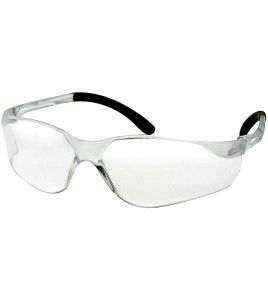
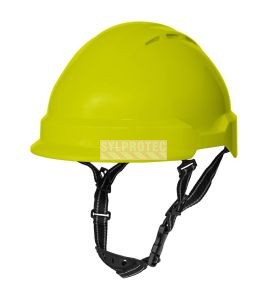
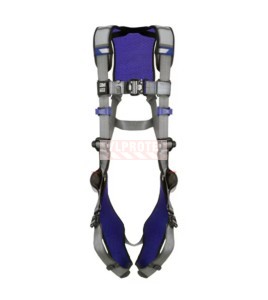
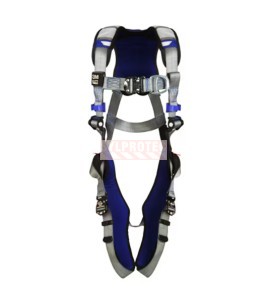
The roofer Roofers spend their days on slippery slopes, exposed to sun, wind and a drop of several storeys. A shifting tile or one step too close to the edge is enough to turn a routine job into a serious fall. On this type of job site, the worker wears full personal protective equipment: a safety harness (FPH140202XCA) connected to the anchor point, protective gloves (G602) suited to the task, safety glasses (YA12E90801), a white protective helmet (TA222) against impacts and a flame-resistant work coverall (V1766).
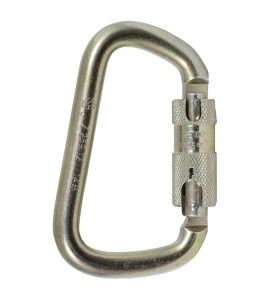
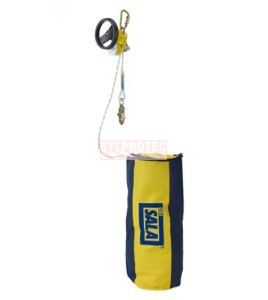
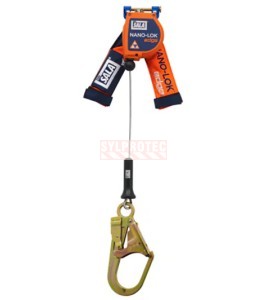
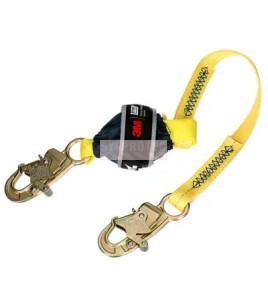
Complementary suggestions: to build the complete fall protection system, connect this anchor to a harness (FPH140202XCA) or a second ExoFit model (FPH140203XCAL), linked by an energy-absorbing lanyard (FPL1246568C) or a self-retracting lifeline (FPLR3500252); depending on the surface, complete it with another anchor (FPAM88). Also plan a rescue Rollgliss R550 device for height with a hand wheel and integrated hoist (FPLR550, 350 ft of rope), and mark off the work zone with a DANGER barricade tape (ECT3RE9) and a signalling cone (EPTCONE).

Data sheet
You might also like
DBI-SALA 3M Roof Anchor for Bitumen Membrane Roofs. Permanent zinc-plated steel anchor point for bitumen-based membrane roofs. Capacity 310 lb (141 kg).